|
THE ISSUES
A few facts about stem cell research:
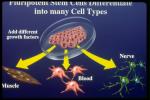
• Stem cells serve as a sort of repair system for the body because they can theoretically divide without limit to replenish
other cells for as long as the person or animal is still alive. When a stem cell divides, each “daughter” cell
has the potential to either remain a stem cell or become another type of cell with a more specialized function, such as a
muscle cell, a red blood cell, or a brain cell.
• Human embryonic stem cells are thought to have greater developmental potential than adult stem cells. A fertilized
egg is considered totipotent, meaning that its potential is total; it gives rise to all the different types of cells in the
body.
• Stem cells are isolated from human embryos that are a few days old. Cells from these embryos can be used to create
stem cell "lines" —cell cultures that can be grown indefinitely in the laboratory.*
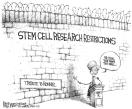
• Individual states have the authority to pass laws to permit human embryonic stem cell research using state funds.
*Embryos of this type are disposed of in fertility clinics, with severe limitations on those permitted to be used.
|